
Call us now :08045475455
 Send Inquiry
 Send Inquiry
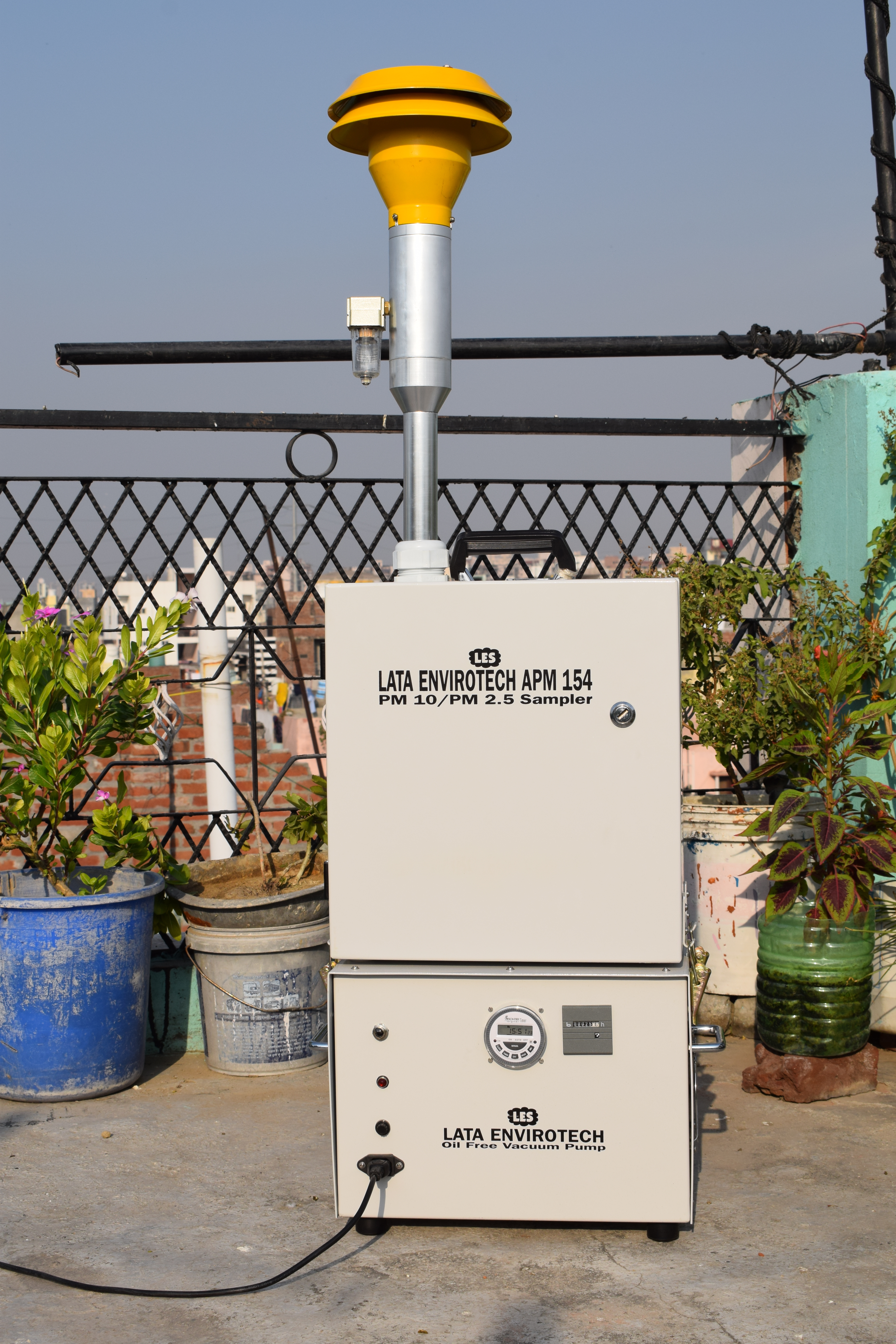
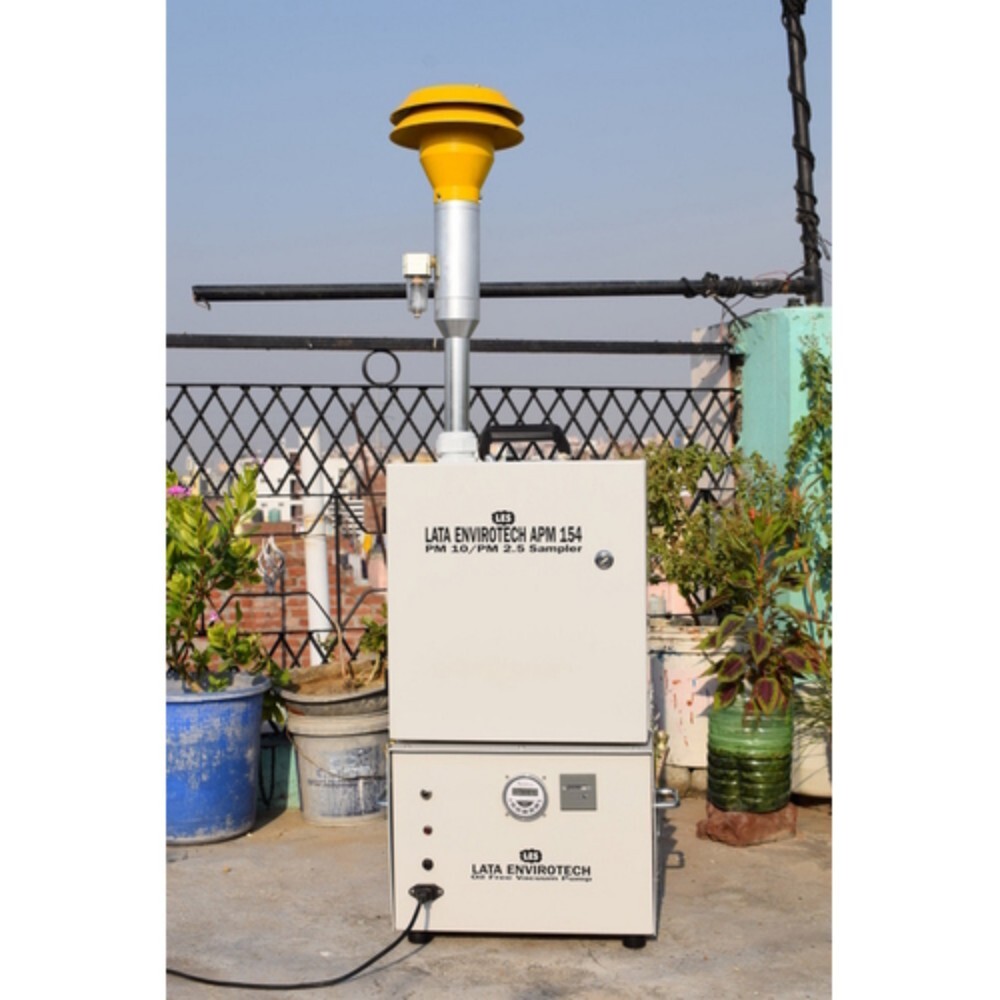
Ambient Air Monitoring Equipments Apm 154
MOQ : 1 , , Piece
Ambient Air Monitoring Equipments Apm 154 Specification
- Automation Grade
- Semi-Automatic
- Air Flow
- 1.5 - 2.0 Litre per minute
- Instruments Type
- High Volume Air Sampler
- Measurement
- Suspended Particulate Matter (SPM) & Respirable Particulate Matter (RPM)
- Display Type
- Digital Timer Display
- Usage & Applications
- Monitoring Suspended Particulate Matter (SPM) and Respirable Dust (RPM) in Ambient Air
- Temperature
- Ambient
- Efficiency
- High Collection Efficiency for Airborne Particulates
- Power Source
- Electric
- Orientation
- Floor Mounted
- Product Type
- Ambient Air Monitoring Equipment
- Material
- Mild Steel
- Cooling System
- Water-cooled
- Noise Level
- <60 dB
- Processing Time
- Continuous Operation
- Capacity
- Sample Flow Rate: 1.5 - 2.0 LPM
- Voltage
- 230 V AC, 50 Hz
- Weight
- Approx. 45 kg
- Dimension (L*W*H)
- 540 x 370 x 810 mm
- Surface
- Powder Coated
- Operating Environment
- Outdoor or Laboratory Applications
- Cabinet Finish
- Powder coated, corrosion-resistant
- Timer
- 0-24 hours digital timer
- Suction
- Through Heavy-duty Blower Motor
- Maintenance
- Low Maintenance, Easy-to-Service Design
- Collection Bottle Material
- Borosilicate Glass
- Filter Size
- 20 x 25 cm standard glass microfiber filter
- Sampling Method
- Impact Plate and Filter Paper
- Motor Power
- 0.25 HP
- Sampling Inlet Height
- 1.0 1.5 meters above ground
Ambient Air Monitoring Equipments Apm 154 Trade Information
- Minimum Order Quantity
- 1 , , Piece
- Supply Ability
- 5 Pieces Per Week
- Delivery Time
- 1 Week
- Main Domestic Market
- All India
About Ambient Air Monitoring Equipments Apm 154
Ambient Air Monitoring Equipments Apm 154
With the help of our well informed experts, we are engaged in manufacturing and exporting a wide range of Ambient Air Monitoring Equipments. The offered equipments are used by industries that help in checking the emission of pollutants. These equipments have the capacity to monitor different types of emissions like sulfur dioxide, nitrogen dioxide, carbon monoxide, lead and ozone. It helps in making the environment clean and safe and allows the technicians to ensure complete observance with ambient air quality standards. We offer these Ambient Air Monitoring Equipments at competitive price.
Features :
- High performance
- Reliable
- Multi-point factory calibration
Fine Particulate Sampler
PM 2.5 Sampler
Item Code: APM-154
Special features :
- PM10 and PM2.5 Impactors of sampler based on designs standardized by US EPA
- Two part cabinet ensures that temperature of PM 2.5 filter remains close to ambient temperature
- Diaphragm Pump with a low noise
- Lower sampling rate of 1m3/hr reduces filter choking even in areas having high FPM levels
- Critical Orifice maintains constant sampling rate of 1 m3/hour
- Sampler can run continuously 28 hrs monitoring
- Low power consumption
- Low weight essay to transport in field
- Can be measure PM10 or PM2.5 at a time
- Calibration Certificate for each instrument shall be provided with instruments
- Compact and portable.
- Weight: Approx 25 Kg.
Specification:
- Size Selective inlets: Omni-directional air inlet with PM 10 separation through an impactor followed by PM 2.5 separation through a WINS Impactor
- Flow Rate: Constant sampling rate of 1 m3/hr unaffected by voltage fluctuation and filter choking maintained by critical orifice system
- Sampling Time Record: 0 to 9999.99 hrs. recorded on a Time Totalizer
- Vacuum Pump: Diaphragm Pump
- Power requirement: Nominal 220 V, Single Phase, 50Hz AC mains supply. For proper operation and safety a good earth connection is mandatory
- Automatic Sampling: 24 hrs programmable timer to automatically shut off the system after pre-Control set time interval.
- Sample Volume: Dry Gas meter records the total air volume sampled
- Filter: Filter holder designed to accept any standard 47 mm diameter filter media
- Warranty: One year
Specification
|
Weight |
25 kg |
|
Frequency |
50Hz |
|
Voltage |
220 V, Single Phase |
|
Driven Type |
Electric |
|
Display |
Digital |
|
Automation |
Semi Automatic |
Precision Air Monitoring
The APM 154 delivers consistent performance by accurately measuring both SPM and RPM levels in diverse environments. Its design, powered by a robust 0.25 HP motor and efficient glass microfiber filter, ensures that samples are collected at optimal flow rates for thorough airborne particulate analysis.
Durable and Reliable Design
Crafted with a powder-coated, corrosion-resistant mild steel cabinet, the APM 154 stands up to harsh outdoor conditions. The water-cooled system and borosilicate glass collection bottle enhance longevity and sample integrity, making this unit suitable for repeated and extended field or laboratory use.
User-Friendly Operation and Maintenance
Featuring a digital timer display, adjustable sample flow rate (1.52.0 LPM), and semi-automatic functionality, the APM 154 is straightforward to operate. Its easy-to-service construction results in reduced downtime, enabling users to focus on their sampling work with minimal interruptions.
FAQs of Ambient Air Monitoring Equipments Apm 154:
Q: How does the APM 154 collect and measure airborne particulates?
A: The APM 154 uses an impact plate and filter paper method, drawing air through a glass microfiber filter using a heavy-duty blower motor. This setup efficiently collects suspended and respirable particulate matter (SPM and RPM) for accurate analysis.Q: What are the recommended environments for operating the APM 154?
A: The APM 154 is suitable for both outdoor and laboratory applications. Its powder-coated, corrosion-resistant design and water-cooled system allow it to function effectively in diverse conditions, including environmental monitoring stations and research labs.Q: When should maintenance be performed on the APM 154?
A: Routine maintenance is minimal due to the easy-to-service design. It is advisable to regularly inspect and replace the glass microfiber filter, clean the impact plate, and check the water-cooling system to ensure optimal performance, especially after extended sampling periods.Q: Where should the sampling inlet of the APM 154 be placed during operation?
A: To obtain representative data, the sampling inlet should be positioned 1.0 to 1.5 meters above ground level. This orientation helps ensure accurate monitoring of airborne particulates relevant to human exposure levels.Q: What is the sampling process for collecting ambient air particulates with this equipment?
A: Set the digital timer (024 hours) and ensure the glass microfiber filter is correctly installed. The unit draws ambient air through the filter at a flow rate of 1.5 2.0 liters per minute during the programmed period, automatically collecting particulate samples for later analysis.Q: How can users benefit from using the APM 154 for air quality assessments?
A: The APM 154 offers high collection efficiency, reliable digital controls, and continuous, low-noise operation (<60 dB), enabling professionals to conduct accurate and uninterrupted measurements of SPM and RPM. Its low-maintenance, durable design further guarantees cost-effective long-term use.Q: What types of organizations or users is the APM 154 suited for in India?
A: This equipment is ideal for government agencies, environmental consultancies, research institutions, manufacturers, dealers, service providers, suppliers, traders, and wholesalers involved in monitoring and controlling air quality across urban and industrial settings.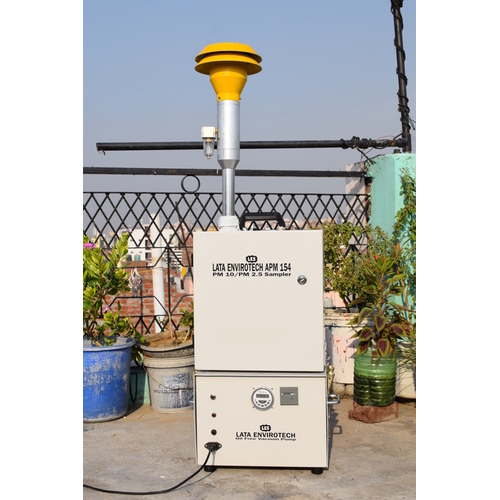
Tell us about your requirement

Price:
Quantity
Select Unit
- 50
- 100
- 200
- 250
- 500
- 1000+
Additional detail
Mobile number
Email

More Products in Air Pollution Monitoring Instruments Category
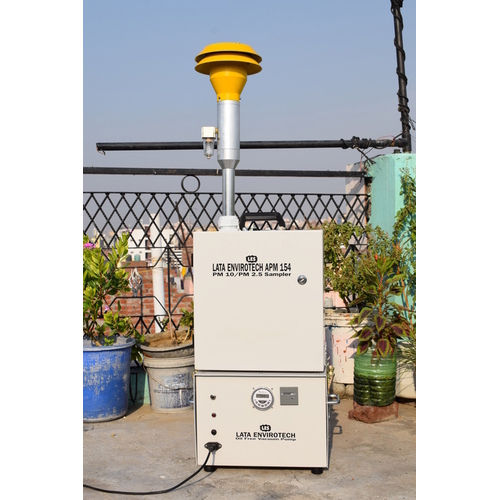
Air Sampler Apm 154
Price Range 50000.00 - 80000.00 INR / Piece
Minimum Order Quantity : 1 , , Piece
Material : Alluminium
Product Type : Scientific Equipment
Voltage : 220 Volt (v)
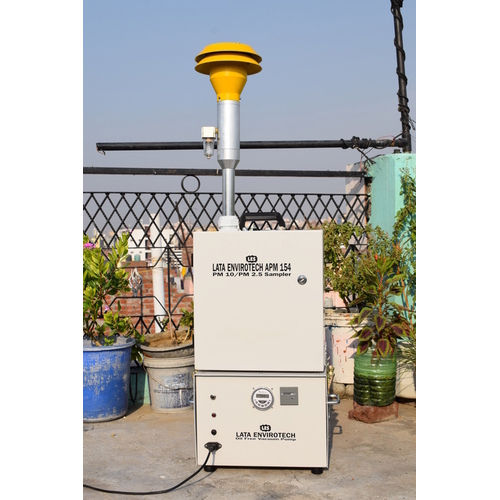
Air Pollution Instrument Apm 154
Price 50000.00 INR / Piece
Minimum Order Quantity : 1 , , Piece
Material : Alluminium
Product Type : Scientific Equipment
Voltage : 220 Volt (v)
Air Quality Monitors Apm 154
Price Range 50000.00 - 80000.00 INR / Piece
Minimum Order Quantity : 1 , , Piece
Material : Alluminium
Product Type : Scientific Equipment
Voltage : 220 Volt (v)
Air Pollution Check Equipment Apm 154
Price 55000 INR / Piece
Minimum Order Quantity : 1 , , Piece
Material : Metal
Product Type : Air Pollution Check Equipment


 Send Inquiry
Our Products


M-101, Gali No. 9, Master Park, Khoda Colony, Post Box Sector-62, Noida - 201309, Uttar Pradesh, India

Mr. Horam
(Chief Executive)
Mobile :08045475455
 Send Inquiry
 Send SMS
Developed and Managed by Infocom Network Private Limited.
